

Beta applications open November 1. Beta applications open November 1. Beta applications open November 1. Beta applications open November 1.Beta applications open November 1. Beta applications open November 1. Beta applications open November 1. Beta applications open November 1.
AppraiserFlywheel — Quick Facts
-
A processing system for appraisal order management — intake, engagement, scheduling, payment, and follow-up.
-
Not a replacement for your report-writing software. Not tied to an MLS subscription.
-
Built-in protocols for secure login and secure delivery.
-
Built by a working Certified Residential Appraiser — 28+ years, 11,000+ assignments.
-
Member of ICAP and MNAA.
-
For newer appraisers building a practice, and experienced appraisers refining one.
-
Currently in beta — 2 to 4 spots, open to appraisers with real-world experience.
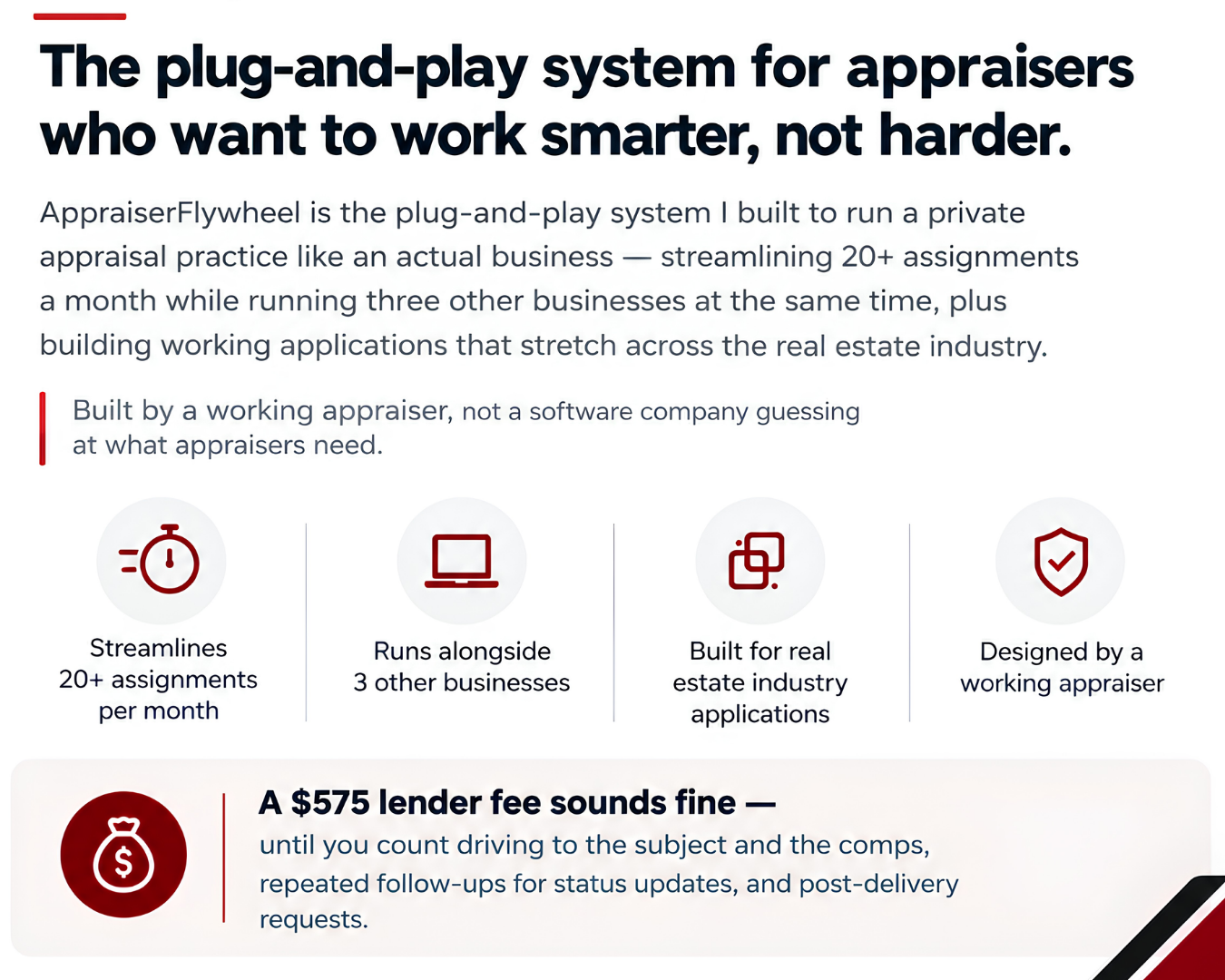
That’s realistically 6 to 8 hours: $72–$96 an hour before expenses. With overhead typically around 50% for a full-time appraiser — taxes, insurance, license maintenance, MLS fees, software, vehicle, and office — that’s closer to $36–$48 an hour, for licensed, liability-bearing work most people can’t legally do.

Why I Built This
My name is Shawn Foppe. Twenty-eight plus years as a certified appraiser, over 11,000 assignments completed. For much of the last 15 years, I worked the same hamster wheel most appraisers know — AMC panels, lender rosters, compressed fees, companies bought, sold, or merged into different platforms — results that never quite added up to the business I actually wanted.
I run four businesses total: Shawn Foppe Appraisal, LLC; The Real Estate Value Edge, LLC; The Art of Appraisal, LLC — the company that built AppraiserFlywheel — and my own property investment company. That last one goes back further than the others: I was twelve years old, working my grandfather’s rental properties, long before I had a professional word for any of it. AppraiserFlywheel is the reason none of the four fall through the cracks.
Every market and every appraiser is different. These are my results, in my practice. The beta exists to find out what they look like in yours.
What AppraiserFlywheel Actually Does
Built on GoHighLevel, developed and tested inside a real, working appraisal practice — not a concept, not a mockup. Not some entity forcing you to adapt to their moving targets. AppraiserFlywheel doesn’t replace your appraisal software — you keep full operational control over your report-writing software, whatever you already use. This is a processing system for appraisal order management: intake, engagement, scheduling, payment, and follow-up. Payments run through Stripe, set up right inside AppraiserFlywheel, so collecting from the client and paying out to you are automated.
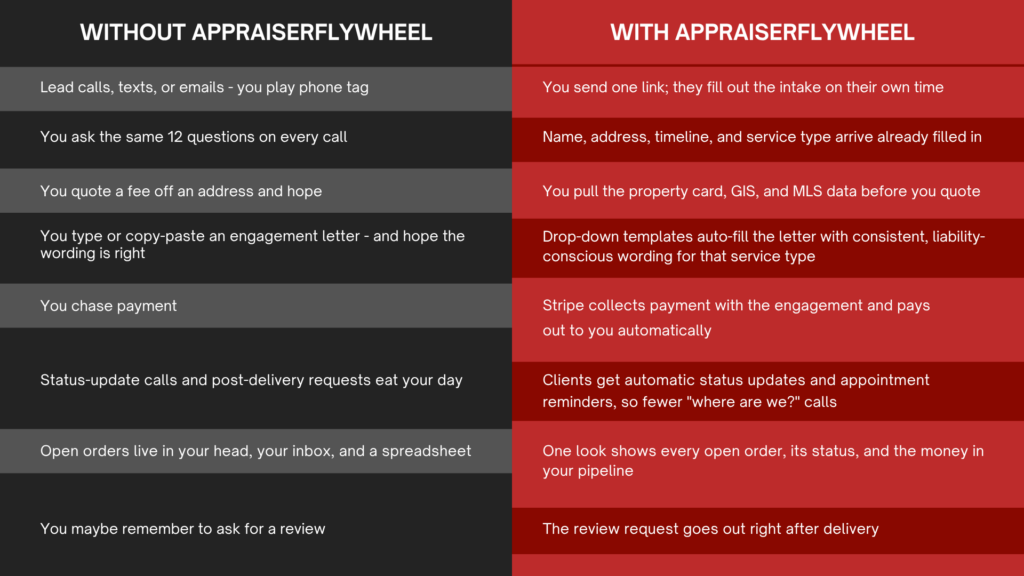
Clients get automatic status updates and appointment reminders, which means fewer follow-up calls. And one look at your dashboard shows every open order, its status, and the money in your pipeline. It has nothing to do with an MLS subscription and isn’t tied to one. The system also has built-in protocols for secure login and secure delivery, so client and property data stays protected throughout. You are free to email the report directly from your primary email address as well.
This works whether you’re a newer appraiser building your practice from the ground up, or an experienced appraiser refining one that’s already running. Beta testing specifically calls for some real-world experience — see the criteria below — but the system itself is built for both.
What My Clients Say


What This Actually Frees You Up to Do

Where Your Time Actually Goes
AppraiserFlywheel frees you from repetitive administrative work so you can focus on completing more appraisal files, serving clients, and growing your business. With automated service explanations, engagement letters, payments, reminders, scheduling, and lead tracking, you spend less time chasing paperwork and more time on revenue-producing work. By streamlining your process, you can potentially reclaim hours each week, take on more files without working longer hours, and maintain full control of your schedule, fees, and business.

What Lending Work Actually Pays — Before UAD 3.6 Hits Full Force
Lending work can look profitable on paper, but once you account for the true hours involved, including status-update follow-ups and post-delivery requests, plus overhead and increasing reporting requirements. A $575 assignment taking 6–8 hours may only yield $72–$96/hour before expenses, while a complex $875 file taking 8–12+ hours works out to about the same — $73–$109/hour before expenses. With UAD 3.6 significantly increasing the amount of data and reporting required, the gap between fees and workload may become even wider.
No Admin Staff Required.
You don’t need to hire admin staff. AppraiserFlywheel is a system built by a 28-year appraiser who runs multiple businesses, and it bridges the gaps an assistant would cover. Use the time it gives back however fits your practice: take on more orders in the same working hours, or handle the same number of orders and work fewer hours.
Build Your Referral Base Like a Business Owner, Not a Vendor
Inside The Art of Appraisal community on Skool — the business that built AppraiserFlywheel — we share real-world insight on how to actually build the relationships that refer non-lending work: agents, lenders, home inspectors, attorneys, title companies, social media, and a website that actually works for you. Those are the referral sources that compound instead of resetting to zero every time an AMC or lender changes its panel structure. This isn’t theory. It’s what’s actually worked, from someone still doing it.
In the future, we plan to build a national network — partnering with other appraisers who specialize in non-lending work to build a referral base beyond any one local market. An appraiser using AppraiserFlywheel in one region can send and receive qualified referrals from appraisers doing the same work elsewhere. Planned launch 2027.
Beta Program — 2 to 4 Spots
Before this opens more broadly, we’re looking for 2 to 4 beta partners to help finish proving the system in live, real-world practices.
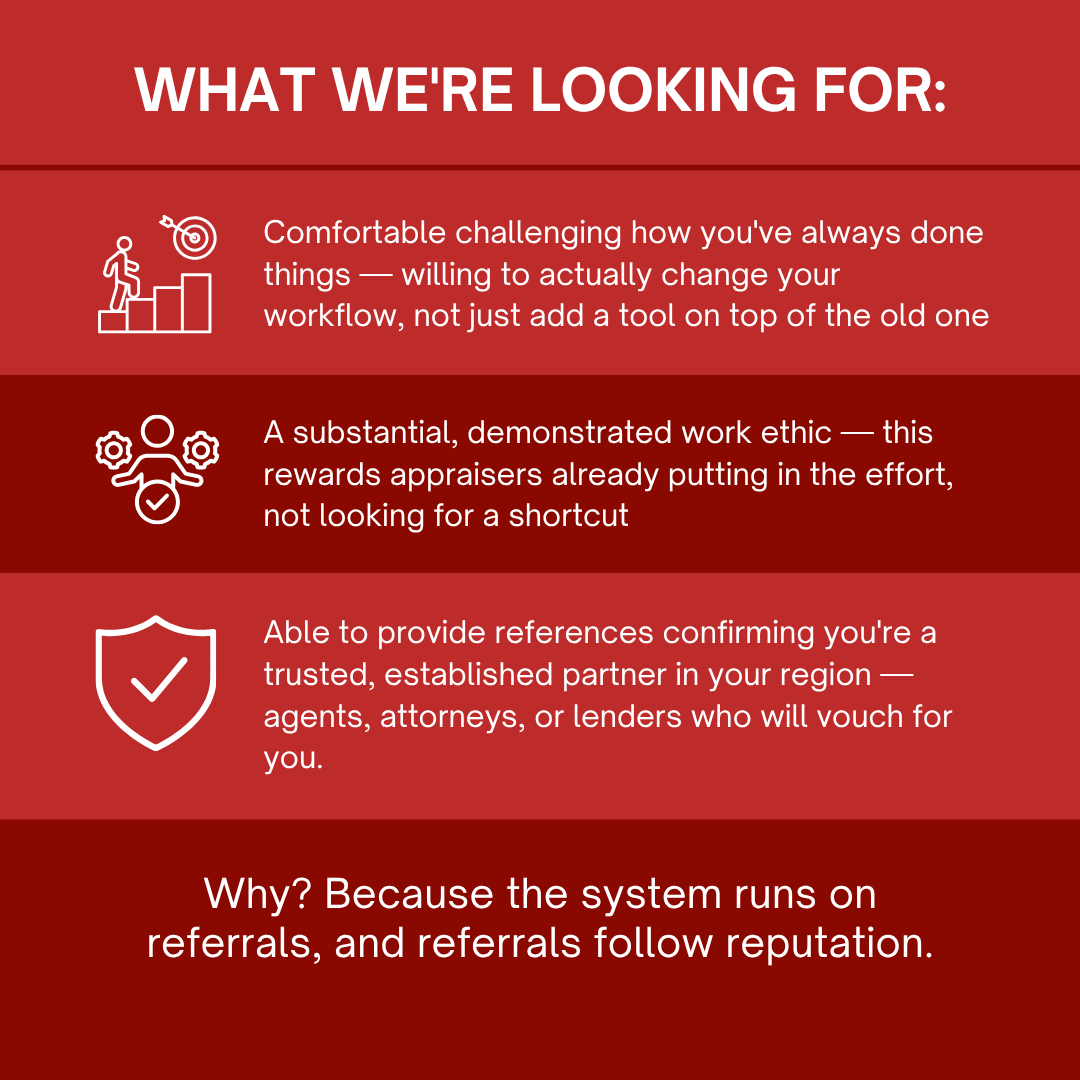
Beta terms are structured differently from the standard offer — preferential pricing for an extended initial term, in exchange for real feedback while the system is finished. Details are discussed directly, not published here.
Common Questions
A Word on Where This Is Headed
The appraiser population is shrinking every year — fewer new appraisers entering the field than almost any other licensed profession. That’s a real risk to the industry. It’s also a real opportunity for the appraisers who build something durable inside it.
AppraiserFlywheel exists because the non-lending market — estates, divorces, tax appeals, investors, attorneys, pre-listing consulting — is where an independent appraiser can actually build a business, not just survive a panel. This system is built to model that for the next 10+ years, not just this one.
The Real Estate Value Edge and The Art of Appraisal are run as two separate businesses on purpose — clean books, clear income, clear outcomes for each. But they share one mission underneath: teaching the business side of this industry, not just the technical side, and helping it stay strong nationally while the workforce keeps shrinking. Nothing about how either one is built is a new idea — build systems instead of more hours, know your real numbers, listen before you ever try to close. None of that is unique to appraisal. It’s just rarely been pointed directly at appraisers, by someone who’s actually done the work themselves.
Investment
AppraiserFlywheel isn’t a concept. It’s up and running in my own appraisal practice today. The beta program is how we finalize pricing and add the features working appraisers ask for most, based on real feedback from people using the system, not guesses made in advance.
Here’s what we can tell you now:
Monthly plan, 12-month agreement. Expect the monthly cost to come in at less than one typical non-lending assignment per month. At private fees of $650 to $1,000+, a single order covers it.
No long-term commitment? A month-to-month option will be available, with a one-time setup fee to cover the hands-on work of building your account.
Founding beta members get a locked-in rate for their first 12 months, the setup fee is waived with a 12-month agreement, and they help shape the features we add next. And non-lending work often multiplies. Adjoining parcels may need separate appraisals, and an estate may need both a retrospective and a current value. One call often lands two assignments. Beta spots are limited. Founding pricing is shared on your onboarding call. Apply below, and we’ll reach out to see if Flywheel is a fit for your practice.
Next step for readers who aren’t beta candidates
Next step for readers who aren’t beta candidates
Not ready for the system yet? Join The Art of Appraisal community on Skool, where we talk about expanding your local reach to real estate professionals, attorneys, home inspectors, title companies, and local lenders who refer non-lending work.